I Rebuilt All My Websites in a Week. The Real Problem Wasn’t the Design.
Why page builders quietly wrecked my branding — and how one design system fixed five sites at once
For years my websites drifted apart from each other, and I couldn’t have told you exactly when it happened.
I run several sites. My personal site. A photography content site. A tech content site. A courses site. A few landing pages. And if you’d visited two of them back to back, you’d have had no idea they belonged to the same person. Different fonts. Different spacing. Buttons that didn’t match. A header that felt one way here and another way there.
I knew the branding was inconsistent. What I didn’t understand until recently was why it kept happening, and that the tool I trusted to build those sites was quietly the cause.
The problem nobody warns you about with page builders
I built all of these on WordPress, using page builders like Elementor. And I want to be fair to those tools, because they’re genuinely powerful. Elementor is flexible, capable, and there’s almost nothing you can’t build with it.
That flexibility is exactly the problem.
When you can change anything on any page, you do. You drop in an image and it doesn’t quite fit, so you nudge the height. The headline on this page is longer than the one on the last site, so you shrink the text a little. You adjust a margin here, a color there, a button size somewhere else. Each change is tiny. Each one is reasonable in the moment.
But you’re making those decisions one page at a time, across dozens of pages, across years. And there’s nothing holding them together. So the site slowly pulls itself apart. Then you copy a design over to a second site to save time, start making the same little adjustments there, and now you have two sites drifting in two different directions.
Multiply that by five sites and several years, and you get what I had: a collection of sites that were all mine and none of which looked like they knew each other.
The problem was never my taste or my effort. It was that I had total control and nothing enforcing consistency. Freedom without a system is how good branding quietly dies.
What I did instead
This year I rebuilt everything. Still on WordPress, but without the page builder. Instead of designing page by page, I started with a design system and let everything flow from it.
Here’s the actual process, because it’s simpler than it sounds.
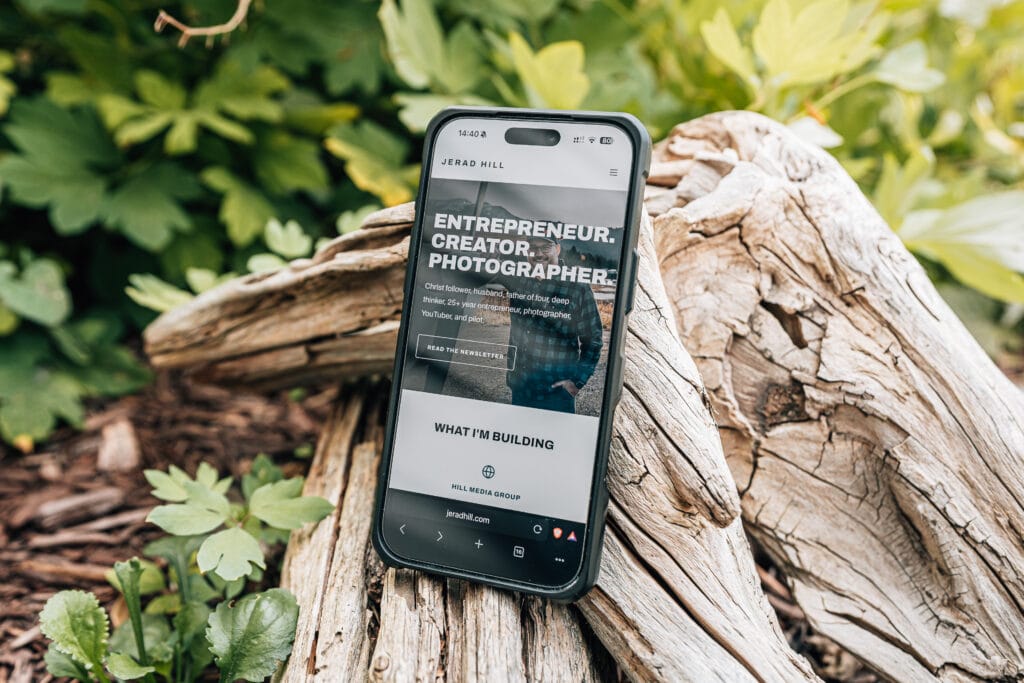
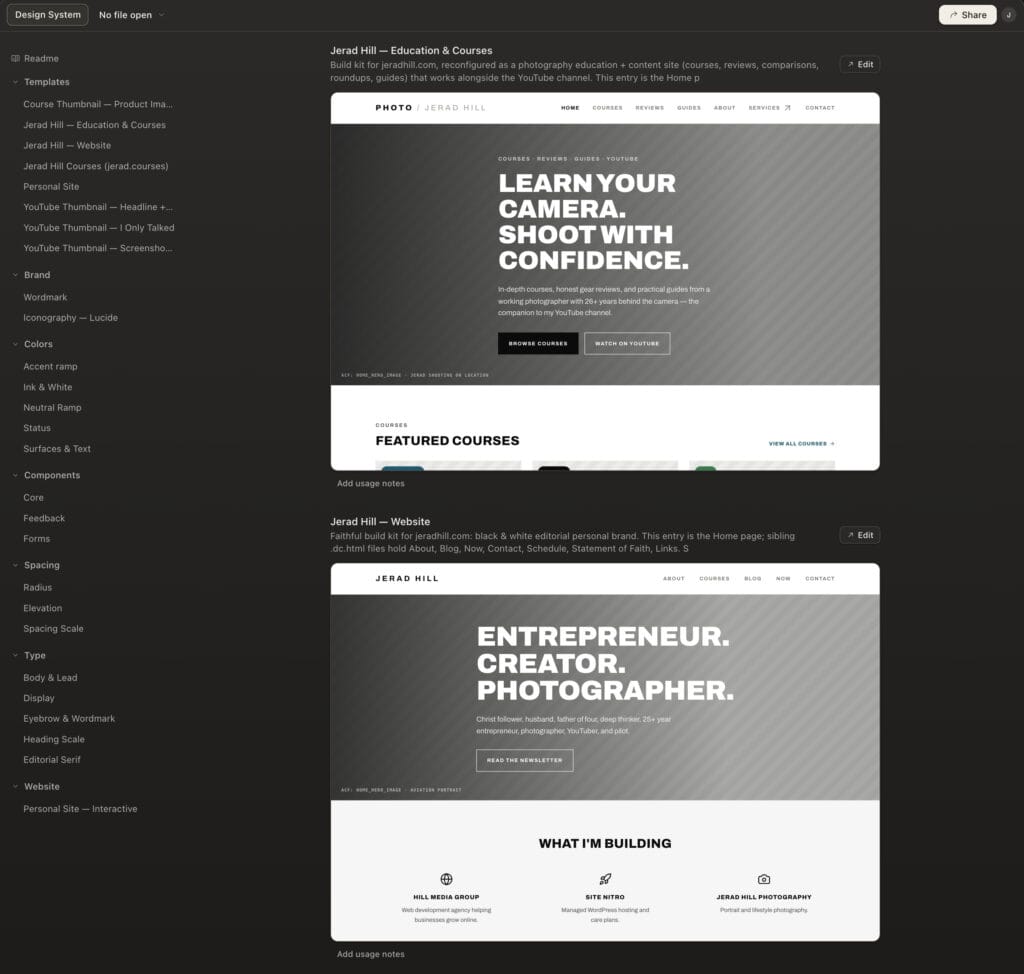
I started with my personal site, jeradhill.com. In a Claude chat, I worked out a brief: the feel I wanted, the priorities, how I wanted the site to carry itself. I handed that brief to Claude Design and built an actual design system: the fonts, the colors, the spacing, the components. Effectively a brand and a set of brand guidelines, defined once, in one place.
I worked inside Claude Design until the look and feel were exactly where I wanted them. Then I generated a handoff document, the design system plus the specifications, and took that into Claude Code. From that handoff, Claude Code built a custom WordPress theme I could install directly on the site.
No page builder. No nudging margins one page at a time. A real theme, built from a real system, where consistency is baked into the foundation instead of something I have to babysit.
I was blown away by how fast it went.
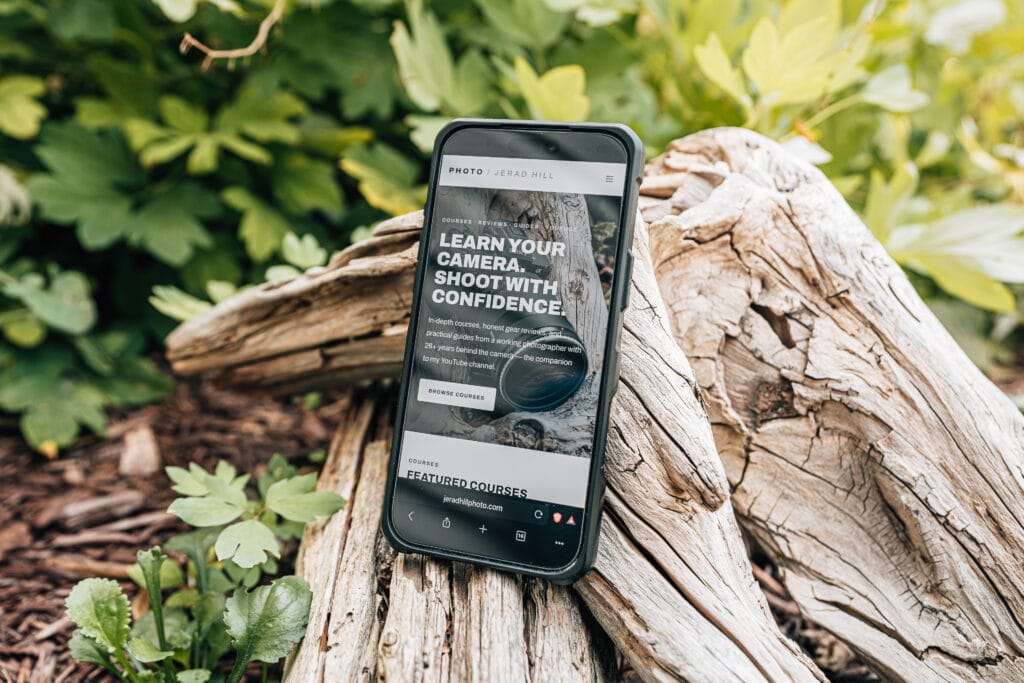
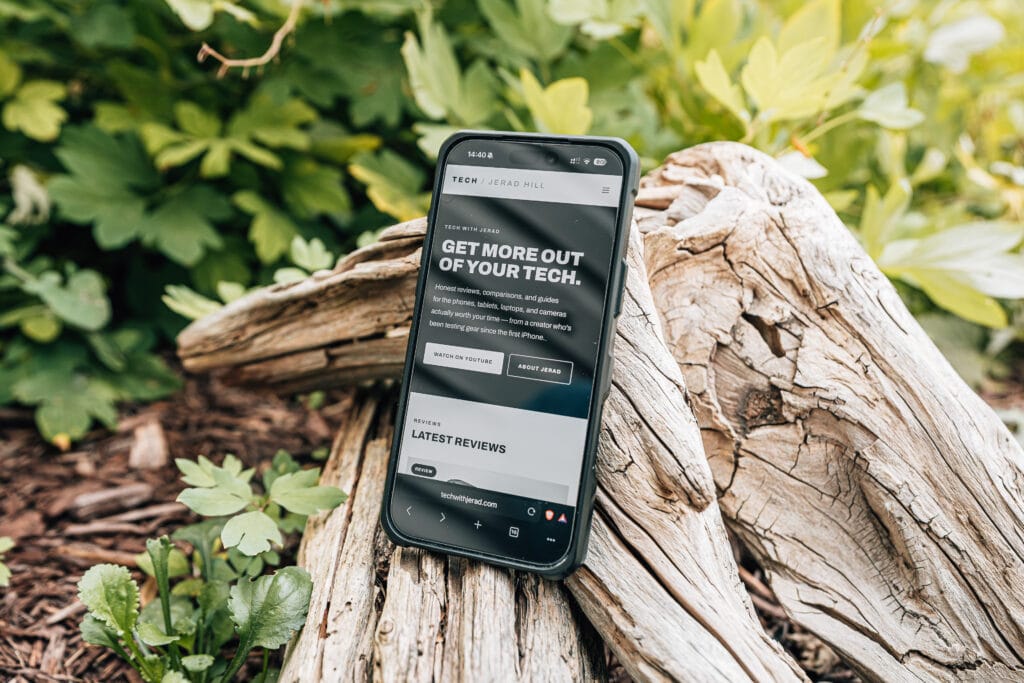
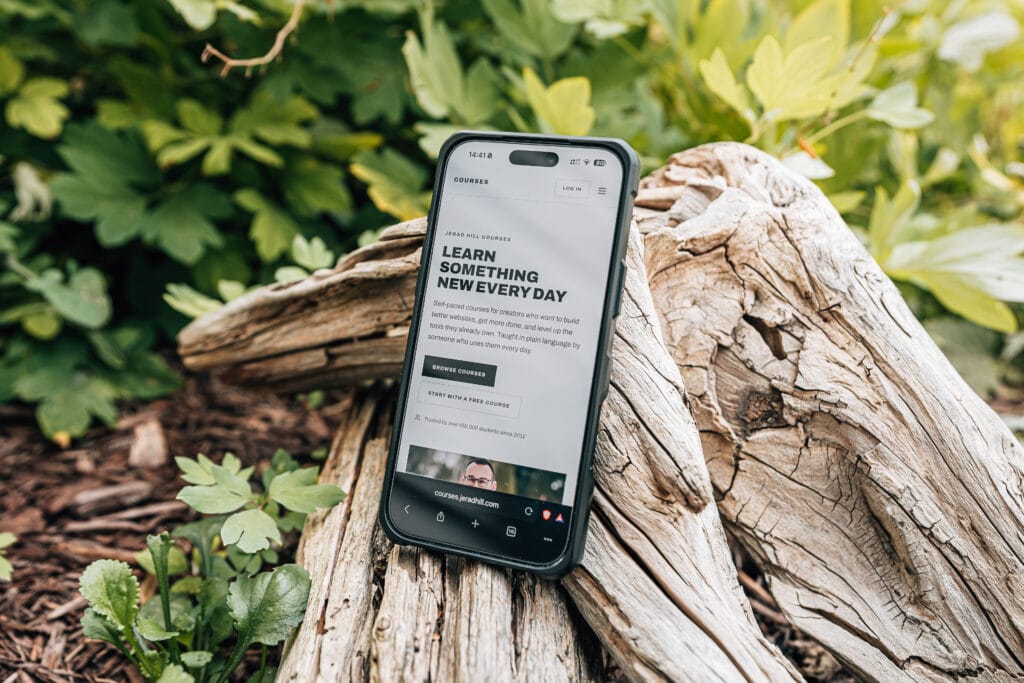
Then I did it four more times
I liked the result on my personal site enough that I decided every other site should share the same foundation.
The logic is simple: if someone is on my photography content and wants to jump over to my personal site, that transition should feel seamless. They should know, without thinking about it, that they’ve gone from one of my sites to another, because the sites clearly belong to the same person.
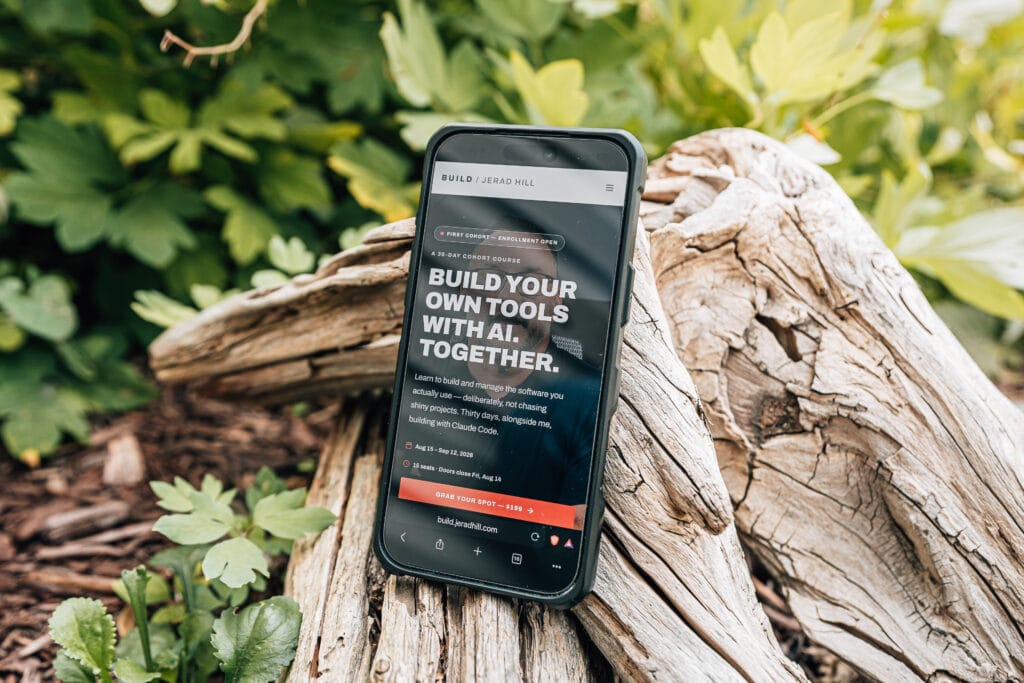
So I brought the design over to the photography site. Then the tech content site. Then I extended the theme to work with my courses site, including support for LearnDash and FluentForms, which run my online courses. Each time, because the design system already existed, replicating it was fast. I wasn’t rebuilding from scratch. I was applying a foundation I’d already defined.
Now, whether you land on my personal site, my courses site, my photography site, or my tech site, and soon the individual course landing pages, the branding is consistent across all of it. For the first time in years, my sites look like they were built by the same person, because for the first time, they actually share the same bones.
What actually changed
It would be easy to read this as a story about a faster way to build websites. It is that. But the faster part isn’t the point.
The point is that I finally solved a problem I’d been managing badly for a decade. I used to fight inconsistency by hand. Noticing a site had drifted, going in to fix it, watching it drift again. I was treating the symptom. The actual fix was to change the foundation so the drift couldn’t happen in the first place.
A design system isn’t a design. It’s a set of decisions made once, in a moment of clarity, so you don’t have to remake them badly a hundred times later when you’re tired and just trying to get an image to fit.
That’s the difference between a system and a tool. The page builder gave me infinite control and let me make a hundred small decisions that added up to a mess. The design system took the decisions off the table and gave me consistency for free.
I didn’t need more control. I needed less. I needed to decide once and let the foundation carry it.
I filmed a good deal of this process, and I’ve been putting together free courses on building custom WordPress themes and selling courses or memberships with WordPress using Claude Code. If that’s useful to you, they’re on my courses site. Reply and I’ll point you to them.